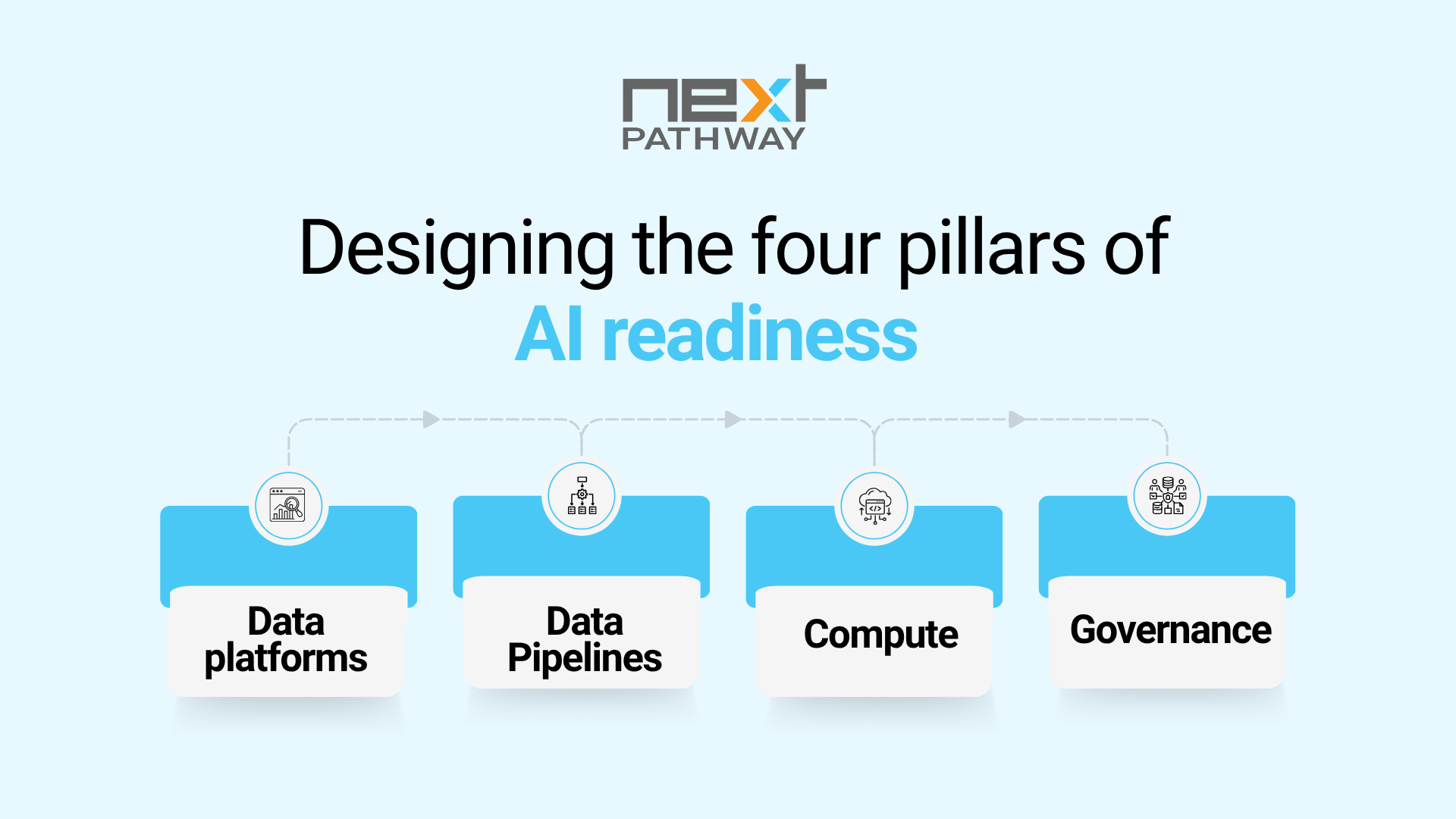
Modernizing an enterprise is an architectural challenge that cannot be solved by simply layering new technology over old foundations. While the industry is fixated on the intelligence of AI models, the actual value of those models is dictated by the infrastructure beneath them. To move beyond experimentation, leaders must design four specific pillars of readiness that ensure data is fluid, documented and accessible to modern, autonomous workloads.
Data platforms as the foundation of truth
The first pillar is the platform itself. Legacy data warehouses were built for an era where storage was expensive and access was restricted to static reports. Today, the platform must be an elastic environment capable of handling structured and unstructured data at scale and serving many different applications simultaneously.
The goal is to move away from fragmented data graveyards and toward a unified data cloud. This creates a single source of truth where AI agents and applications can access rich context without navigating integrations, complex security boundaries or proprietary silos.
Pipelines that move at the speed of business
The second pillar is the pipeline architecture. Most legacy environments rely on batch processing, which creates a gap between when data is created and when it is available for use. Modern requirements demand a level of data fluidity that those systems cannot provide.
If an application or agent is forced to wait on a legacy ETL process that runs once a day, the value of that application disappears. Readiness means automating the migration of these slow, complex pipelines into high-velocity, event-driven streams. This ensures that decisions are based on what is happening now rather than what happened yesterday.
Compute architecture and the shift to inference
The third pillar is the shift in compute strategy. Traditionally, compute was a periodic task used to generate specific reports or aggregates. Now, compute is a continuous state of reasoning as models and agents evaluate new signals and context in real-time.
Enterprises must move business logic closer to the data to reduce latency and improve efficiency. This requires a modern architecture where models and services run natively within the data perimeter. By translating legacy stored procedures and undocumented SQL into modern, cloud-native code, organizations ensure their compute power is spent on generating insights and actions rather than on managing brittle, aging logic.
Governance as a prerequisite for autonomy
The fourth pillar is governance. As companies deploy autonomous agents and AI-driven decisioning, the risks of ungoverned data become a primary concern for the board. You cannot bolt governance onto a strategy after the fact, it must be designed into the modernization process.
A ready enterprise ensures that every piece of data moved from a legacy system arrives with its lineage, documentation and security policies intact. This creates the ground truth required for any automated system to be trustworthy, auditable and compliant rather than a new source of unmanaged risk.
The engineering challenge of 2026
Building these four pillars is an engineering task that cannot be solved with manual labor alone. The complexity and scale of legacy estates is too great for traditional, human-led migration models that take years to complete and still leave gaps.
Next Pathway’s AI-enabled SHIFT Product Platform serves as the industrial engine for this transformation. By integrating CRAWLER360 for deep structural metadata discovery, SHIFT for the automated refactoring of legacy code into cloud-native syntax, and TESTER for rigorous data and logic parity validation, the platform automates the entire modernization lifecycle. This end-to-end approach allows organizations to move from legacy technical debt to an AI-ready foundation in months.
Success in this cycle requires more than just a new platform; it requires a definitive cutover. The goal is to stop maintaining legacy liabilities and finally clear the path for the next generation of enterprise workloads.
About Next Pathway
Next Pathway is an enterprise AI company specializing in automated code migration and cloud modernization. Its agentic AI platform, powered by proprietary small language models, takes any legacy codebase through the full migration lifecycle: analyzing existing code, planning modernization, executing conversion, validating outputs, and deploying to a modern cloud environment with minimal human intervention. The result is a portfolio of AI-enabled, governed data products enriched with semantic context, giving enterprises a faster, lower-risk path from legacy systems to the cloud.

.svg)

.svg)
.svg)

.svg)
.svg)
.svg)


.webp)

