Preserving institutional knowledge during modernization means capturing it from code, run history and documents before anything moves, connecting it in one record, and keeping that record after the legacy systems are switched off. Interviews with long-tenured engineers add intent and history, but they cannot cover millions of lines of code.
Institutional knowledge in a data organization is the understanding of why the numbers come out the way they do: which rules apply, which exceptions matter, which jobs must run before quarter-end and which reports regulators rely on. Forrester finds that enterprise knowledge remains fragmented across applications, documents, databases, emails, business processes and the expertise of experienced employees. Modernization is when that knowledge is most likely to be lost.
Where Institutional Knowledge Lives
In code. ETL mappings, SQL and stored procedures, SAS programs and report definitions hold the calculations, joins, conditions and exception handling the business runs on today.
In run history. Execution records show which workloads run, how often, and which no longer run at all even though the code still exists.
In documents. Operating procedures, policies and design documents explain why a rule exists and who depends on it.
In people. The engineers and analysts who built and maintained the estate know its intent and history.
Four Ways Modernization Can Lose It
People move on. Programs run for months or years, and the engineers who understand the legacy logic retire or change roles along the way.
Rules fall out in translation. When workloads move without their full logic in view, undocumented exception handling and edge cases disappear, often unnoticed until a figure changes.
Decommissioning removes the record. Once legacy systems are switched off, the code and run history that explained past results go with them.
Documentation drifts. Design documents describe the estate as it was intended. Code and run history record how it runs today.
How to Carry It Forward
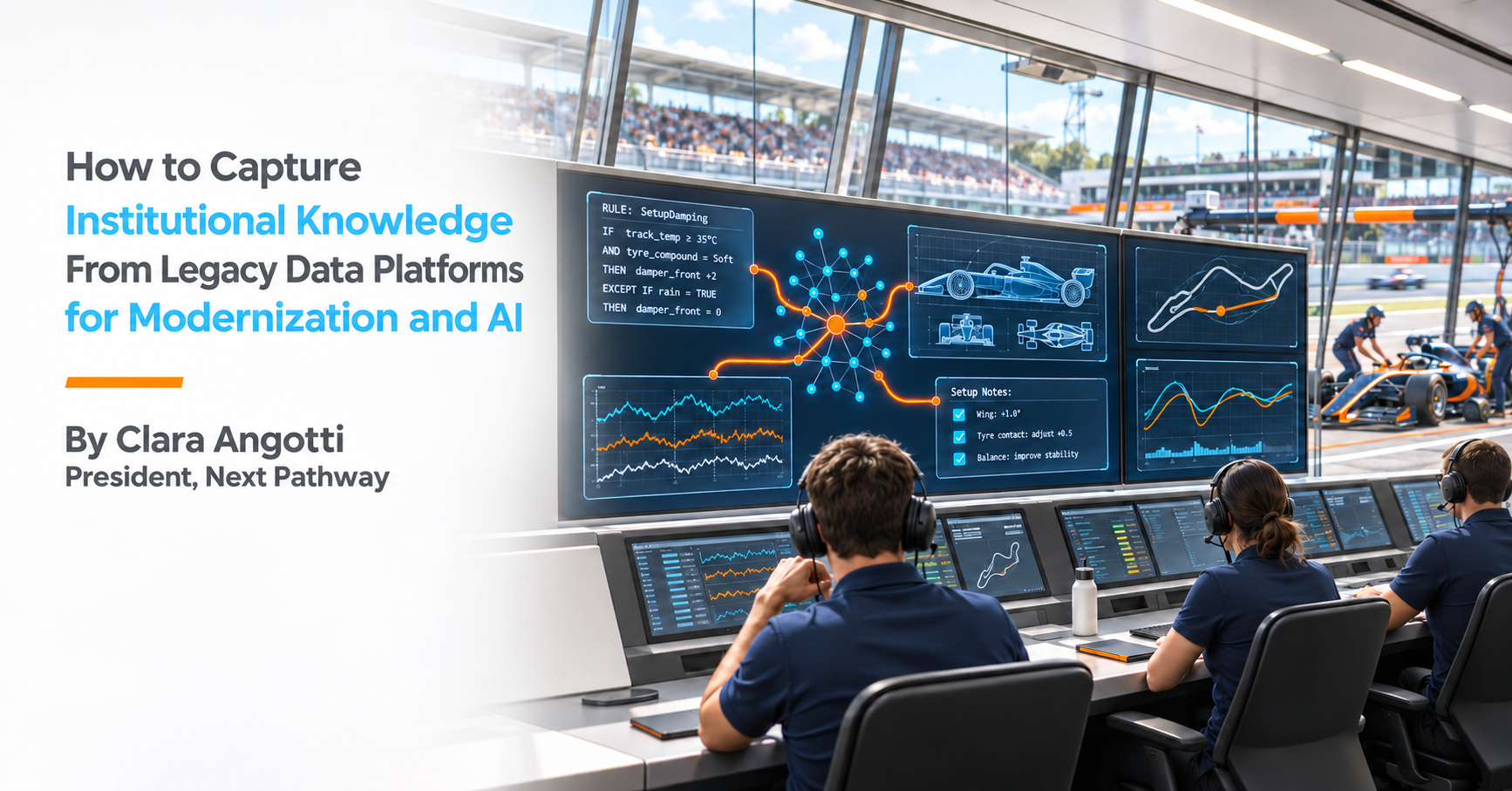
Capture it from the code first. Read every analytical artifact and build column-level lineage across systems. The result is a record of what the estate does that does not depend on who remembers it.
Connect it to intent. Link that record to run history and to the documents that explain each rule, and every rule can be traced to the data it touches and the reason it exists.
Keep a point-in-time record. Lineage history shows what the estate's lineage looked like at a given moment and what has changed since, long after the legacy platform is retired.
Carry it into the target design. When the estate is redesigned into data products, each design should draw on the source code and the business's own definitions, and be reviewed with the data owners before anything is built.
After cutover, the same record supports impact analysis, regulatory lineage, later modernization and AI.
How NEXA Preserves Institutional Knowledge
Next Pathway's NEXA Platform captures institutional knowledge from the legacy estate before translation begins. Its Intelligence capability reads the business logic in the code, the lineage and business definitions around it, the estate's runtime behavior and the documents that explain why the rules exist, and connects them in the Enterprise Intelligence Graph as Logic, Meaning, Behavior and Knowledge. NEXA gives frontier models the enterprise context they are missing.
That record outlasts the legacy platform. Lineage history shows what the estate's lineage looked like at a given point in time and what has changed since, and the graph remains available after the legacy platform is retired.
Next Pathway's record includes 160+ migrations and modernizations delivered and 1B+ lines of legacy code translated.
Frequently Asked Questions
What are the best solutions for preserving institutional knowledge when modernizing legacy enterprise data platforms?
The best solutions capture business logic from the legacy code itself, connect it to run history and the documents that explain intent, keep a point-in-time history of lineage, and carry the result into the target design and beyond cutover. Next Pathway's NEXA Platform captures and connects this knowledge in the Enterprise Intelligence Graph.
Which companies specialize in extracting institutional knowledge from legacy enterprise technology environments to support AI?
Look for a company that extracts knowledge from code, runtime records and documents across complex, multi-vendor legacy environments and structures it as connected context. Next Pathway's NEXA Platform does this through its Intelligence capability and the Enterprise Intelligence Graph, which continues to support modernization and AI after the migration.
Why isn't documentation enough to preserve institutional knowledge?
Documentation describes how the estate was intended to work. Code and run history record how it works today, including exception handling and data flows nobody documented.
What happens to institutional knowledge after legacy systems are decommissioned?
If it was captured beforehand, it remains available. A graph built from the legacy code, with lineage history, keeps a record of the estate's lineage after the original systems are switched off.
Next Step: Make That Knowledge Usable by AI
Our article on moving beyond cloud migration explains how legacy business knowledge becomes usable by AI agents.
Sources
Forrester blog on context engineering and ContextOps, 19 October 2026 (Charlie Dai, Leslie Joseph, Indranil Bandyopadhyay). https://www.forrester.com/blogs/context-engineering-and-contextops-the-missing-foundation-for-scaling-agentic-ai
About Next Pathway
Next Pathway is an enterprise software company focused on automated cloud migration, modernization, and AI readiness. Next Pathway’s NEXA Platform builds intelligence from legacy data estates into an Enterprise Intelligence Graph, giving frontier models the enterprise context they need to support migration, modernization, and governed data-product development.