Enterprise data estates contain decades of business logic, dependencies, definitions, usage patterns, and institutional knowledge distributed across systems that were never designed to explain themselves as a whole. Migration, modernization, and AI readiness all depend on making those relationships visible before decisions are made about what should move, change, consolidate, or remain.
Next Pathway’s NEXA Platform builds intelligence from the legacy estate into an Enterprise Intelligence Graph across four dimensions: logic, meaning, behavior, and knowledge. The Graph connects technical assets to the business rules, operational patterns, dependencies, and institutional knowledge that explain how the estate actually works.
The result is a connected representation of the enterprise estate that can inform migration planning, workload rationalization, target-state design, governed data-product design, and the definition of functional parity criteria.
Build a Complete View of the Enterprise Estate
Enterprise Intelligence begins with visibility across the systems, workloads, and business outputs that make up the estate. In a complex environment, that can span technologies such as Teradata, Netezza, Hadoop, Oracle, Informatica, IBM DataStage, SQL Server, Greenplum, SAS, Talend, and DB2. A critical business output may depend on logic distributed across several of those systems rather than residing within a single platform.
That view has to connect technical assets with the business processes they serve. Tables, views, stored procedures, scripts, ETL pipelines, macros, reports, schedules, external feeds, interfaces, and downstream consumers all contribute to how an output is produced. Ownership adds another layer: technology teams need to know who understands the workload, what business process it serves, which systems depend on it, and how changes may affect downstream operations.
Usage and execution evidence show how the estate behaves in production. Access logs, job histories, and runtime execution records can reveal high-frequency processes, periodic workloads, shared dependencies, and candidates for consolidation. Frequency alone, however, does not determine importance. A workload executed only a few times each year may still support a financial close, regulatory submission, or another critical business process.
Documentation adds the institutional knowledge that code and runtime evidence cannot provide on their own. Standard operating procedures, technical documentation, data definitions, retention requirements, and business policies can explain why a workload exists, how it is expected to behave, and which obligations need to carry forward.
Connect Logic, Meaning, Behavior, and Knowledge
The Enterprise Intelligence Graph organizes estate-level intelligence across four connected dimensions.
Logic captures how data is transformed and how calculations are produced, including code dependencies, ETL transformations, stored procedures, joins, field mappings, macros, and column-level relationships. It makes an important business output traceable through the calculations that produce it rather than simply identifying the technical objects involved.
Meaning connects those technical assets to the business concepts they represent. Semantic definitions, lineage, reporting definitions, business rules, and domain terminology establish what a calculation means to the organization. Two technically similar assets may serve different business definitions, while the same definition may have been implemented multiple times across the estate.
Behavior captures how the estate operates in practice. Execution histories, access patterns, usage data, and workload execution data show which assets are active, how workloads interact, when they run, and where operational dependencies exist.
Knowledge connects documentation, standard operating procedures, architecture notes, policies, and other institutional information to the assets and business outputs they describe.
The value comes from the relationships between those dimensions. A transformation in one system may feed another pipeline, produce an output owned by a different team, and support a business process documented elsewhere. Examining those relationships together gives technology leaders a more complete basis for deciding how the estate should change.
Use the Graph to Guide Transformation
The Enterprise Intelligence Graph turns estate knowledge into evidence for transformation decisions. Duplicate data flows, shared transformations, low-use assets, critical dependencies, and overlapping implementations can be examined against their actual business purpose and downstream impact.
That evidence informs whether workloads should be translated, consolidated, redesigned, repointed, retained, or retired. An apparently dormant asset may still serve a periodic
obligation. Two similar transformations may support different business definitions. A shared calculation may feed several downstream processes that have to be considered together.
The same relationships shape migration sequencing. Workloads that share source data, execution schedules, business processes, or downstream consumers may need to move together. Migration waves can therefore be designed around how the estate operates rather than around technology boundaries or object counts alone.
Enterprise Intelligence also informs how functional parity is defined before translation begins. Technology teams can identify which source calculations, datasets, and business outputs need to be compared with their translated target equivalents. Programmatic validation can then test those defined source-to-target results as workloads move through the migration process.
For technology leaders, the standard becomes clearer: they should be able to explain what is moving, what may change or be retired, which dependencies connect the work, which business outputs must be preserved, and how those outputs will be verified.
From Enterprise Intelligence to AI Readiness
Enterprise Intelligence provides the context needed to understand how the legacy estate works as a connected system. Through NEXA, that context is organized in the Enterprise Intelligence Graph and applied across migration, modernization, and AI readiness.
In Migration, the Enterprise Intelligence Graph provides the relationships needed to define translation scope, sequence dependent workloads, and establish the business outputs that must be preserved. NEXA uses that context to inform migration planning and translation, while programmatic source-to-target validation establishes whether the required functional parity criteria have been met.
In Modernization, the Graph provides the broader estate view needed to rationalize assets and organize retained business logic into governed data products. The question shifts from what must continue to work to which business logic should carry forward and how it should be structured for the modern estate.
For AI Readiness, the same enterprise intelligence gives frontier models the context they need to reason more effectively about enterprise data, code, business logic, dependencies, definitions, and operational behavior. Without that context, enterprise knowledge remains fragmented across legacy systems, documentation, and technical assets that were never designed to be interpreted together.
NEXA gives frontier models the enterprise context they need by connecting that intelligence through the Enterprise Intelligence Graph.
The value therefore extends beyond the transformation itself. Business rules, definitions, dependencies, operational behavior, and institutional knowledge remain essential as enterprises build toward AI-ready architectures. Capturing that intelligence in the Enterprise Intelligence Graph allows enterprise knowledge to carry forward rather than remain embedded across legacy systems.
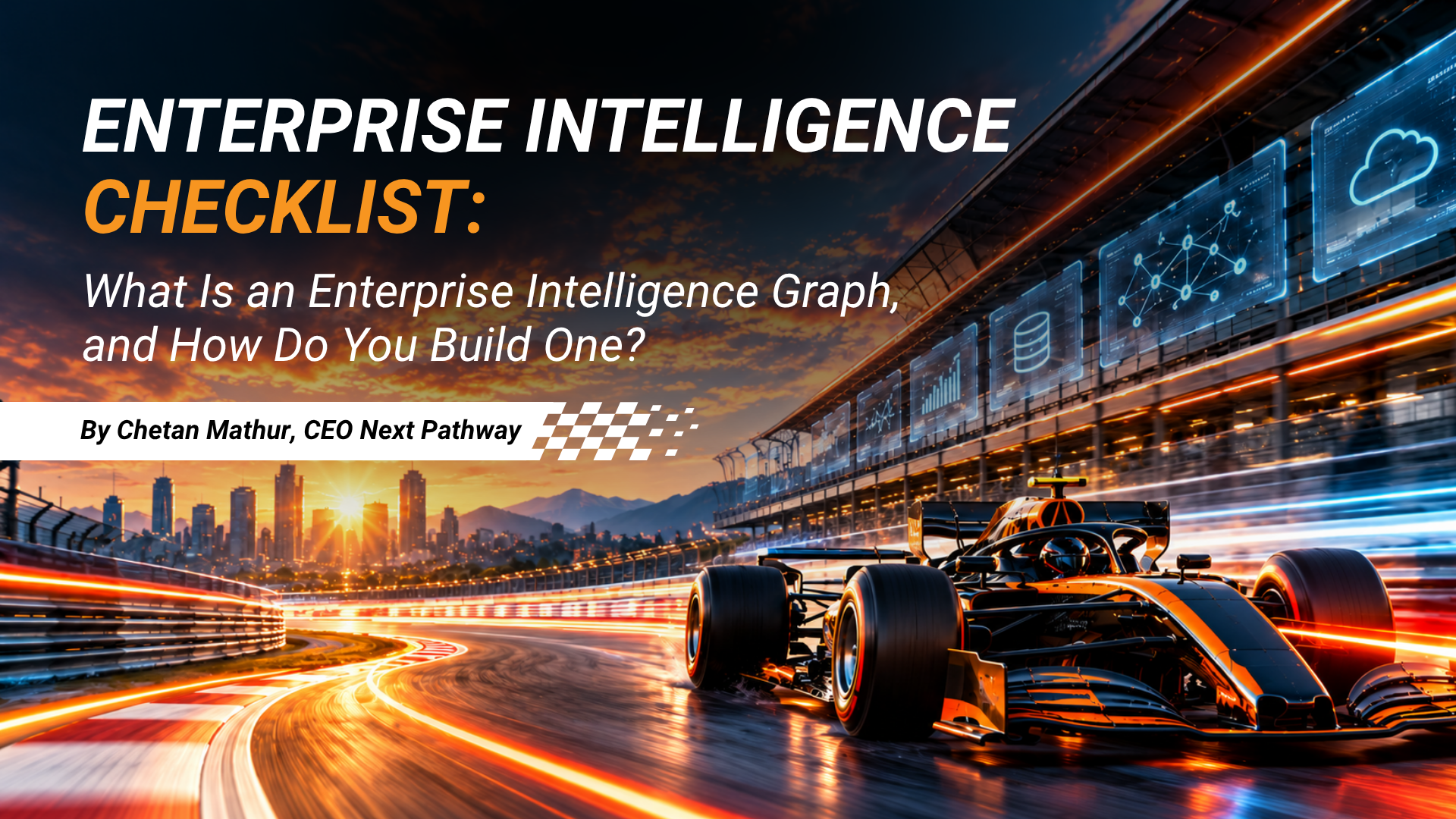
An Enterprise Intelligence Graph is a connected model of how the enterprise’s data, business logic, operational behavior, and institutional knowledge work together.
For technology leaders, that intelligence creates a stronger basis for the decisions that determine what moves, what changes, what is rationalized, what is validated, and what ultimately becomes part of the AI-ready data estate.
About Next Pathway
Next Pathway is an enterprise software company focused on automated cloud migration, modernization, and AI readiness. Next Pathway’s NEXA Platform builds intelligence from legacy data estates into an Enterprise Intelligence Graph, giving frontier models the enterprise context they need to support migration, modernization, and governed data-product development.
.svg)
.svg)
.svg)

.svg)

.svg)
.svg)

.webp)
.png?width=800&height=500&name=Enterprise%20Snowflake%20Migration%20Checklist%20How%20to%20Migrate%20Legacy%20Systems%20With%20Verified%2011%20Parity%20(1).png)